


 Windows
Linux
For Windows
First download Music bee and install. Then Add your playlists. Download and install Musicbee Remote Plugin
For Linux
Install Clementine:
You can add the Clementine PPA and receive updates by running the command below in a terminal window (Press Ctrl+Alt+T to open the terminal):
apt-add-repository sudo ppa me- : / davidsansome clementine
So far, the PPA supports Ubuntu 14.04, Ubuntu 13.10, Ubuntu 12.10, and Ubuntu 12.04.
After added
apt-get update sudo apt-get install sudo clementine
32-bit or 64-bit? Check it out at System Settings -> Details.
The downloaded package is .deb file, just double-click on it to open with Ubuntu Software Center
Tip: Restart your computer if you were upgrading Clementine from a previous version.
2. Open the music player and go to menu “Tools -> Preferences”. Select Network Remote in the left pane, then do:
- Enable remote control by ticking the box ‘Use a network remote control’
- Depends on your need, leave the port default or change it.
- Set LAN only or both LAN & WAN access
- Set an authentication code, so that clients need to type the code to connect.
- Tick ‘Allow downloads’ if you want to download songs from Clementine to Android.


Once installed, start the app, type in the IP of the remote machine and click connect.
How to install clementine·
How to install clementine remote·
How to install Musicbee remote·
Music·
new technology·
Player
Awesome Music Players that can operate Remotely.
WindowsLinux
For Windows
First download Music bee and install. Then Add your playlists. Download and install Musicbee Remote Plugin
For Linux
Install Clementine:
You can add the Clementine PPA and receive updates by running the command below in a terminal window (Press Ctrl+Alt+T to open the terminal):
apt-add-repository sudo ppa me- : / davidsansome clementine
So far, the PPA supports Ubuntu 14.04, Ubuntu 13.10, Ubuntu 12.10, and Ubuntu 12.04.
After added
apt-get update sudo apt-get install sudo clementine
32-bit or 64-bit? Check it out at System Settings -> Details.
The downloaded package is .deb file, just double-click on it to open with Ubuntu Software Center
Tip: Restart your computer if you were upgrading Clementine from a previous version.
2. Open the music player and go to menu “Tools -> Preferences”. Select Network Remote in the left pane, then do:
- Enable remote control by ticking the box ‘Use a network remote control’
- Depends on your need, leave the port default or change it.
- Set LAN only or both LAN & WAN access
- Set an authentication code, so that clients need to type the code to connect.
- Tick ‘Allow downloads’ if you want to download songs from Clementine to Android.
Once installed, start the app, type in the IP of the remote machine and click connect.

Google Can Understand Everything of Your Image
When Google acquired Word Lens in May 2014, it was clear that it was only a matter of time until the startup’s impressive visual translation technology would be folded into Translate. That moment is coming today – Word Lens integration and improved voice translations are coming in the latest Google Translate update.
 Word Lens lets you point your smartphone to a foreign language text and have it instantly replaced with your language of choice, right on the screen. Until this update, you could scan text with your device and have it translated and displayed into a text box, a clunky experience in most cases. Word Lens removes that friction, and everything happens in real time. Street signs, restaurant menus, product labels, there are tons of situations you could find it useful.
This genuinely amazing capability will be available in English, coupled with French, German, Italian, Portuguese, Russian, or Spanish. That means you will be able to translate from English to French, and the other way, but not from French to Russian, for instance. Google says more languages are coming.
The second big feature in this update is instant voice translation. Before the update, translating speech required tapping the mic button each time someone said something, as well as switching between languages in order to accommodate the other speaker. Now that all happens on the fly, because Translate understands different languages without requiring your input.
Download with Google Play
Get Smart with Google Translate: Word Lens and instant voice translations and Language Detection
When Google acquired Word Lens in May 2014, it was clear that it was only a matter of time until the startup’s impressive visual translation technology would be folded into Translate. That moment is coming today – Word Lens integration and improved voice translations are coming in the latest Google Translate update.
Word Lens lets you point your smartphone to a foreign language text and have it instantly replaced with your language of choice, right on the screen. Until this update, you could scan text with your device and have it translated and displayed into a text box, a clunky experience in most cases. Word Lens removes that friction, and everything happens in real time. Street signs, restaurant menus, product labels, there are tons of situations you could find it useful.
This genuinely amazing capability will be available in English, coupled with French, German, Italian, Portuguese, Russian, or Spanish. That means you will be able to translate from English to French, and the other way, but not from French to Russian, for instance. Google says more languages are coming.
The second big feature in this update is instant voice translation. Before the update, translating speech required tapping the mic button each time someone said something, as well as switching between languages in order to accommodate the other speaker. Now that all happens on the fly, because Translate understands different languages without requiring your input.
Download with Google Play
Many of us think of the Internet as a global community. But two-thirds of the world’s population does not yet have Internet access. Project Loon is a network of balloons traveling on the edge of space, designed to connect people in rural and remote areas, help fill coverage gaps, and bring people back online after disasters.

Google has partnered with the French space agency, the Centre National d'Etudes Spatiales, or CNES, with a goal of reaching higher ground with its Project Loon initiative.
Project Loon is essentially a program by Google to bring free Internet to developing countries through low-flying weather balloons that project Wi-Fi signals.
The two companies remained relatively quiet about their plans to partner, although CNES did reveal that Google would be taking advantage of the space agency's expertise in balloon technology. Google, on the other hand, will conduct long-running balloon campaigns as a part of CNES' study of the ozone and stratosphere.
Project Loon was first conceived by Google X, the division of the company that is dedicated to "moon shots," or projects that are ahead of their time and may not have immediate impact but have a high potential for future payout.
See More About Loon
The partnership may have impacts beyond Project Loon, however. Google has been under increased scrutiny in Europe, with the European Parliament promoting a breakup of Google and Google chosing to shut down Google News in Spain after new laws were passed requiring the company to pay fees to the publications from which it takes news snippets.
Google X is known for a number of other interesting projects. For example, that division of Google is behind Google Glass, an augmented reality headset that allows users to perform many functions without having to reach for their phone. It's also behind Project Ara, which is a modular smartphone that allows users to remove and replace certain components of a smartphone to be upgraded as technology gets better.
Faq about Loon Project
Google has partnered with the French space agency, the Centre National d'Etudes Spatiales, or CNES, with a goal of reaching higher ground with its Project Loon initiative.
Project Loon is essentially a program by Google to bring free Internet to developing countries through low-flying weather balloons that project Wi-Fi signals.
The two companies remained relatively quiet about their plans to partner, although CNES did reveal that Google would be taking advantage of the space agency's expertise in balloon technology. Google, on the other hand, will conduct long-running balloon campaigns as a part of CNES' study of the ozone and stratosphere.
Project Loon was first conceived by Google X, the division of the company that is dedicated to "moon shots," or projects that are ahead of their time and may not have immediate impact but have a high potential for future payout.
See More About Loon
The partnership may have impacts beyond Project Loon, however. Google has been under increased scrutiny in Europe, with the European Parliament promoting a breakup of Google and Google chosing to shut down Google News in Spain after new laws were passed requiring the company to pay fees to the publications from which it takes news snippets.
Google X is known for a number of other interesting projects. For example, that division of Google is behind Google Glass, an augmented reality headset that allows users to perform many functions without having to reach for their phone. It's also behind Project Ara, which is a modular smartphone that allows users to remove and replace certain components of a smartphone to be upgraded as technology gets better.
Faq about Loon Project
New Technology : Global WiFi Network using Google Loon.
Many of us think of the Internet as a global community. But two-thirds of the world’s population does not yet have Internet access. Project Loon is a network of balloons traveling on the edge of space, designed to connect people in rural and remote areas, help fill coverage gaps, and bring people back online after disasters.
Google has partnered with the French space agency, the Centre National d'Etudes Spatiales, or CNES, with a goal of reaching higher ground with its Project Loon initiative.
Project Loon is essentially a program by Google to bring free Internet to developing countries through low-flying weather balloons that project Wi-Fi signals.
The two companies remained relatively quiet about their plans to partner, although CNES did reveal that Google would be taking advantage of the space agency's expertise in balloon technology. Google, on the other hand, will conduct long-running balloon campaigns as a part of CNES' study of the ozone and stratosphere.
Project Loon was first conceived by Google X, the division of the company that is dedicated to "moon shots," or projects that are ahead of their time and may not have immediate impact but have a high potential for future payout.
See More About Loon
The partnership may have impacts beyond Project Loon, however. Google has been under increased scrutiny in Europe, with the European Parliament promoting a breakup of Google and Google chosing to shut down Google News in Spain after new laws were passed requiring the company to pay fees to the publications from which it takes news snippets.
Google X is known for a number of other interesting projects. For example, that division of Google is behind Google Glass, an augmented reality headset that allows users to perform many functions without having to reach for their phone. It's also behind Project Ara, which is a modular smartphone that allows users to remove and replace certain components of a smartphone to be upgraded as technology gets better.
Faq about Loon Project
Google has partnered with the French space agency, the Centre National d'Etudes Spatiales, or CNES, with a goal of reaching higher ground with its Project Loon initiative.
Project Loon is essentially a program by Google to bring free Internet to developing countries through low-flying weather balloons that project Wi-Fi signals.
The two companies remained relatively quiet about their plans to partner, although CNES did reveal that Google would be taking advantage of the space agency's expertise in balloon technology. Google, on the other hand, will conduct long-running balloon campaigns as a part of CNES' study of the ozone and stratosphere.
Project Loon was first conceived by Google X, the division of the company that is dedicated to "moon shots," or projects that are ahead of their time and may not have immediate impact but have a high potential for future payout.
See More About Loon
The partnership may have impacts beyond Project Loon, however. Google has been under increased scrutiny in Europe, with the European Parliament promoting a breakup of Google and Google chosing to shut down Google News in Spain after new laws were passed requiring the company to pay fees to the publications from which it takes news snippets.
Google X is known for a number of other interesting projects. For example, that division of Google is behind Google Glass, an augmented reality headset that allows users to perform many functions without having to reach for their phone. It's also behind Project Ara, which is a modular smartphone that allows users to remove and replace certain components of a smartphone to be upgraded as technology gets better.
Faq about Loon Project

The Leap Motion Controller is actually quite simple. The heart of the device consists of two stereo cameras and three infrared LEDs. These track infrared light with a wavelength of 850 nanometers, which is outside the visible light spectrum.


At this point, the device’s USB controller reads the sensor data into its own local memory and performs any necessary resolution adjustments. This data is then streamed via USB to the Leap Motion tracking software.
Because the Leap Motion Controller tracks in near-infrared, the images appear in grayscale. Intense sources or reflectors of infrared light can make hands and fingers hard to distinguish and track. This is something that we’ve significantly improved with our v2 tracking beta, and it’s an ongoing process.
Software
Once the image data is streamed to your computer, it’s time for some heavy mathematical lifting. Despite popular misconceptions, the Leap Motion Controller doesn’t generate a depth map – instead it applies advanced algorithms to the raw sensor data.
The Leap Motion Service is the software on your computer that processes the images. After compensating for background objects (such as heads) and ambient environmental lighting, the images are analyzed to reconstruct a 3D representation of what the device sees.

Next, the tracking layer matches the data to extract tracking information such as fingers and tools. Our tracking algorithms interpret the 3D data and infer the positions of occluded objects. Filtering techniques are applied to ensure smooth temporal coherence of the data. The Leap Motion Service then feeds the results – expressed as a series of frames, or snapshots, containing all of the tracking data – into a transport protocol.
Through this protocol, the service communicates with the Leap Motion Control Panel, as well as native and web client libraries, through a local socket connection (TCP for native, WebSocket for web). The client library organizes the data into an object-oriented API structure, manages frame history, and provides helper functions and classes.
From there, the application logic ties into the Leap Motion input, allowing a motion-controlled interactive experience. Next week, we’ll take a closer look at our SDK and getting started with our API.
New Tchnology : How Does Work Leap Motion ?
The Leap Motion Controller is actually quite simple. The heart of the device consists of two stereo cameras and three infrared LEDs. These track infrared light with a wavelength of 850 nanometers, which is outside the visible light spectrum.
At this point, the device’s USB controller reads the sensor data into its own local memory and performs any necessary resolution adjustments. This data is then streamed via USB to the Leap Motion tracking software.
Because the Leap Motion Controller tracks in near-infrared, the images appear in grayscale. Intense sources or reflectors of infrared light can make hands and fingers hard to distinguish and track. This is something that we’ve significantly improved with our v2 tracking beta, and it’s an ongoing process.
Software
Once the image data is streamed to your computer, it’s time for some heavy mathematical lifting. Despite popular misconceptions, the Leap Motion Controller doesn’t generate a depth map – instead it applies advanced algorithms to the raw sensor data.
The Leap Motion Service is the software on your computer that processes the images. After compensating for background objects (such as heads) and ambient environmental lighting, the images are analyzed to reconstruct a 3D representation of what the device sees.
Next, the tracking layer matches the data to extract tracking information such as fingers and tools. Our tracking algorithms interpret the 3D data and infer the positions of occluded objects. Filtering techniques are applied to ensure smooth temporal coherence of the data. The Leap Motion Service then feeds the results – expressed as a series of frames, or snapshots, containing all of the tracking data – into a transport protocol.
Through this protocol, the service communicates with the Leap Motion Control Panel, as well as native and web client libraries, through a local socket connection (TCP for native, WebSocket for web). The client library organizes the data into an object-oriented API structure, manages frame history, and provides helper functions and classes.
From there, the application logic ties into the Leap Motion input, allowing a motion-controlled interactive experience. Next week, we’ll take a closer look at our SDK and getting started with our API.

Austrian designer Kristof Retezár has submitted this self-filling water bottle, dubbed Fontus, for award consideration to the James Dyson Foundation. His proposal cites potential benefits both to athletes but also more broadly to regions where obtaining potable water can be difficult (in many cases, these are also places where many travel by bicycle).

While clean water may be tragically scarce for many people here on Earth’s surface, in the atmosphere, thousands of cubic kilometers of life-giving H2O surround us, just there in the air, ripe for the taking. With his Fontus self-filling water bottle, Austrian industrial designer Kristof Retezár is trying to tap that resource.

Here’s how it works. Users attach a half-liter bottle to the device and mount it onto their bicycle. As the bike moves, Fontus then collects, cools, and condenses air into moisture through solar power. Fresh water, now separated from air molecules, drips into the bottle, and with the right humidity, Retezár claims cyclists can produce around 16 ounces of water per hour.
But beyond quenching users’ thirsts, Retezár explains his more humanitarian goals for the project on the device’s entry page for the James Dyson student design awards. He hopes to use the technology behind Fontus to help harvest more water for the over two billion people living in regions desperately in need of it.
But beyond quenching users’ thirsts, Retezár explains his more humanitarian goals for the project on the device’s entry page for the James Dyson student design awards. He hopes to use the technology behind Fontus to help harvest more water for the over two billion people living in regions desperately in need of it.

How does it work? “Basically, condensation occurs when you cool air to its saturation point. Fontus has a small internal cooler that is divided into two halves. A solar panel provides energy to cool the upper half of the condenser, a process that heats the lower half. When air flows past the heated lower half, it makes the top cool even further. Air moving through the chambers is slowed and cooled to condense moisture, which drips down into the bottle.”
The inspiration: “According to UN statistics, More than 2 billion people in more than 40 countries live in regions with water scarcity. In 2030, 47% of the world´s population will be living in areas of high water stress. Water scarcity may be the most underestimated resource issue facing the world today. Every measure to ease this upcoming crisis is a welcome one.”
The inspiration: “According to UN statistics, More than 2 billion people in more than 40 countries live in regions with water scarcity. In 2030, 47% of the world´s population will be living in areas of high water stress. Water scarcity may be the most underestimated resource issue facing the world today. Every measure to ease this upcoming crisis is a welcome one.”

For now, it is a work in progress – whether this design hits mass-production without kinks or complications remains to be seen, particularly given the difficulty of distilling liquid water from air moisture. That said, the process does have a long history in various forms. “Harvesting water from the air is a method that has been practised for more than 2000 years in certain cultures mostly in Asia and Central America. The Earth’s atmosphere contains around 13.000 km3 of mostly unexploited freshwater. This project is an attempt to discover these resources. My goal was to create a small, compact and self-sufficient device able to absorb humid air, separate water molecules from air molecules and store water in liquid form in a bottle.”
New Technology : Fontus self filling water bottle from thin air
Austrian designer Kristof Retezár has submitted this self-filling water bottle, dubbed Fontus, for award consideration to the James Dyson Foundation. His proposal cites potential benefits both to athletes but also more broadly to regions where obtaining potable water can be difficult (in many cases, these are also places where many travel by bicycle).
While clean water may be tragically scarce for many people here on Earth’s surface, in the atmosphere, thousands of cubic kilometers of life-giving H2O surround us, just there in the air, ripe for the taking. With his Fontus self-filling water bottle, Austrian industrial designer Kristof Retezár is trying to tap that resource.
Here’s how it works. Users attach a half-liter bottle to the device and mount it onto their bicycle. As the bike moves, Fontus then collects, cools, and condenses air into moisture through solar power. Fresh water, now separated from air molecules, drips into the bottle, and with the right humidity, Retezár claims cyclists can produce around 16 ounces of water per hour.
But beyond quenching users’ thirsts, Retezár explains his more humanitarian goals for the project on the device’s entry page for the James Dyson student design awards. He hopes to use the technology behind Fontus to help harvest more water for the over two billion people living in regions desperately in need of it.
But beyond quenching users’ thirsts, Retezár explains his more humanitarian goals for the project on the device’s entry page for the James Dyson student design awards. He hopes to use the technology behind Fontus to help harvest more water for the over two billion people living in regions desperately in need of it.
How does it work? “Basically, condensation occurs when you cool air to its saturation point. Fontus has a small internal cooler that is divided into two halves. A solar panel provides energy to cool the upper half of the condenser, a process that heats the lower half. When air flows past the heated lower half, it makes the top cool even further. Air moving through the chambers is slowed and cooled to condense moisture, which drips down into the bottle.”
The inspiration: “According to UN statistics, More than 2 billion people in more than 40 countries live in regions with water scarcity. In 2030, 47% of the world´s population will be living in areas of high water stress. Water scarcity may be the most underestimated resource issue facing the world today. Every measure to ease this upcoming crisis is a welcome one.”
The inspiration: “According to UN statistics, More than 2 billion people in more than 40 countries live in regions with water scarcity. In 2030, 47% of the world´s population will be living in areas of high water stress. Water scarcity may be the most underestimated resource issue facing the world today. Every measure to ease this upcoming crisis is a welcome one.”
For now, it is a work in progress – whether this design hits mass-production without kinks or complications remains to be seen, particularly given the difficulty of distilling liquid water from air moisture. That said, the process does have a long history in various forms. “Harvesting water from the air is a method that has been practised for more than 2000 years in certain cultures mostly in Asia and Central America. The Earth’s atmosphere contains around 13.000 km3 of mostly unexploited freshwater. This project is an attempt to discover these resources. My goal was to create a small, compact and self-sufficient device able to absorb humid air, separate water molecules from air molecules and store water in liquid form in a bottle.”

Belts are so darn boring. However, without them, our ill-fitting pants would be down by our ankles most of the time, not a good look if you’re walking into a job interview or delivering an important speech on global warming. Get spotted in the wrong place at the wrong time and you could even end up spending a night in the cells.
Thankfully, Nifty – a UK-based startup that made a name for itself with its MiniDrive storage solution for the MacBook – is threatening to breathe new life into the humble waist-based loop. The team has come up with an innovative design that incorporates battery-charging tech, offering the pants-wearing public a new way to keep their mobile device at full power while they’re dashing about in their comfortably fitting trousers.
Related Post - Your DNA will Store on Cloude

The XOO Belt (pronounced ‘zoo’) is wearable tech that you might actually want to wear – especially if running out of smartphone juice is an issue for you. And because it’s slung around your body, you’ll have one less thing to carry when you go out.
“It looks, feels and weighs about the same as a really nice belt….but comes with a mighty 2,100mAh of hidden charge and can charge pretty much any device,” the Nifty team says.
Designed with a new breed of lithium ceramic polymer flexible battery, the belt is said to be safe, durable, and weather-resistant, and weighs “about the same” as a regular belt.
While the flexible part of the battery lives inside the belt strap, the rest is contained in the buckle. The charging wire runs alongside the inside of the belt when it’s not in use, with magnetism holding it in place.
You charge it the same way you would your smartphone, and five discretely placed LEDs on the buckle indicate power level. According to Nifty, the belt will fully charge, for example, an iPhone 6 in about 2.5 hours from empty.
Nifty’s XOO Belt is part of a recently launched Indiegogo crowdfunding campaign, so it’s not ready just yet. However, should backers stump up a total of $50,000 by December 18, the company plans to start shipping the product in July with a $155 price tag, though early backers can, of course, get a better deal.
Nifty’s XOO Belt is part of a recently launched Indiegogo crowdfunding campaign, so it’s not ready just yet. However, should backers stump up a total of $50,000 by December 18, the company plans to start shipping the product in July with a $155 price tag, though early backers can, of course, get a better deal.
best phone cell charger·
cell phone battery charge·
charge cell phone·
charge cell phone using belt·
new technology
New Technology : Charge Your Cell Phone Easily Using Your Belt
Belts are so darn boring. However, without them, our ill-fitting pants would be down by our ankles most of the time, not a good look if you’re walking into a job interview or delivering an important speech on global warming. Get spotted in the wrong place at the wrong time and you could even end up spending a night in the cells.
Thankfully, Nifty – a UK-based startup that made a name for itself with its MiniDrive storage solution for the MacBook – is threatening to breathe new life into the humble waist-based loop. The team has come up with an innovative design that incorporates battery-charging tech, offering the pants-wearing public a new way to keep their mobile device at full power while they’re dashing about in their comfortably fitting trousers.
Related Post - Your DNA will Store on Cloude
The XOO Belt (pronounced ‘zoo’) is wearable tech that you might actually want to wear – especially if running out of smartphone juice is an issue for you. And because it’s slung around your body, you’ll have one less thing to carry when you go out.
“It looks, feels and weighs about the same as a really nice belt….but comes with a mighty 2,100mAh of hidden charge and can charge pretty much any device,” the Nifty team says.
Designed with a new breed of lithium ceramic polymer flexible battery, the belt is said to be safe, durable, and weather-resistant, and weighs “about the same” as a regular belt.
While the flexible part of the battery lives inside the belt strap, the rest is contained in the buckle. The charging wire runs alongside the inside of the belt when it’s not in use, with magnetism holding it in place.
You charge it the same way you would your smartphone, and five discretely placed LEDs on the buckle indicate power level. According to Nifty, the belt will fully charge, for example, an iPhone 6 in about 2.5 hours from empty.
Nifty’s XOO Belt is part of a recently launched Indiegogo crowdfunding campaign, so it’s not ready just yet. However, should backers stump up a total of $50,000 by December 18, the company plans to start shipping the product in July with a $155 price tag, though early backers can, of course, get a better deal.
Nifty’s XOO Belt is part of a recently launched Indiegogo crowdfunding campaign, so it’s not ready just yet. However, should backers stump up a total of $50,000 by December 18, the company plans to start shipping the product in July with a $155 price tag, though early backers can, of course, get a better deal.
For $25 a year, Google will keep a copy of any genome in the cloud.

A recent column published by an MIT analyst outlines how Google wants to store your genome, and millions of others, on the cloud. The column claims that allowing the government and companies like Google, Microsoft, Amazon and IBM to hold onto your genome will help facilitate medical discoveries and improve diagnostics as well.
According to the MIT report, Google started working on the Google Genomics program 18 months ago and is already making progress.
For around $25, the search engine giant will store your genome in it’s cloud service that also powers Search, Maps, YouTube, Gmail and Drive.
“We saw biologists moving from studying one genome at a time to studying millions. The opportunity is how to apply breakthroughs in data technology to help with this transition,” says David Glazer, a Google software engineer.
The Wall Street Journal reported midyear that a patient’s genetic code would be less than a gigabyte and ‘economical’ to store on the Cloud platform. If a concept such as DNA storage is utilized, then large volumes of data can be collated onto servers, giving remote access to researchers. The argument presented with such a massive data intake of a person’s ‘blueprint’ would benefit the medical world. The mass storage of people’s genomes could be analyzed by hospitals and universities to get better insight into diseases such as cancer; aiding in the more suitable treatment for a person, down to a potential cure.
Soources:
Jess Bolluyt (10 November 2014) “Why Google Wants to Store out DNA in the Cloud- (Retrieved 15 November 2014)
John Vibes (8 November 2014)“Google Wants to Store your DNA on the Cloud.” - The Anti Media (Retrieved 15 November 2014)
Your DNA will Store on Cloude
For $25 a year, Google will keep a copy of any genome in the cloud.
A recent column published by an MIT analyst outlines how Google wants to store your genome, and millions of others, on the cloud. The column claims that allowing the government and companies like Google, Microsoft, Amazon and IBM to hold onto your genome will help facilitate medical discoveries and improve diagnostics as well.
According to the MIT report, Google started working on the Google Genomics program 18 months ago and is already making progress.
For around $25, the search engine giant will store your genome in it’s cloud service that also powers Search, Maps, YouTube, Gmail and Drive.
“We saw biologists moving from studying one genome at a time to studying millions. The opportunity is how to apply breakthroughs in data technology to help with this transition,” says David Glazer, a Google software engineer.
The Wall Street Journal reported midyear that a patient’s genetic code would be less than a gigabyte and ‘economical’ to store on the Cloud platform. If a concept such as DNA storage is utilized, then large volumes of data can be collated onto servers, giving remote access to researchers. The argument presented with such a massive data intake of a person’s ‘blueprint’ would benefit the medical world. The mass storage of people’s genomes could be analyzed by hospitals and universities to get better insight into diseases such as cancer; aiding in the more suitable treatment for a person, down to a potential cure.
Soources:
Jess Bolluyt (10 November 2014) “Why Google Wants to Store out DNA in the Cloud- (Retrieved 15 November 2014)
John Vibes (8 November 2014)“Google Wants to Store your DNA on the Cloud.” - The Anti Media (Retrieved 15 November 2014)
The technological utility, wrist watches still have their fans - and not just because some of them now have email alerts.

You can now have that solar system diorama you made in school on your wrist in the form of a watch. Van Cleef & Arpel have debuted a gorgeous new astronomical watch, the 44mm Midnight Planétarium, at Geneva’s annual Salon International de la Haute Horlogerie.
The watch shows both numerical time and the rotation of five planets — Mercury, Venus, Earth, Mars, Jupiter, and Saturn — visible from Earth. Each planet is represented by precious and semi-precious stones, which rotate around the sun (a stone in the center) in the amount of time it takes for the actual planet to make a rotation. You’ll easily be able to see a full rotation of Mercury every 88 days and Venus every 224 days, but it’ll take a while to see a full rotation of Saturn — 29 years to be exact.
The watch shows both numerical time and the rotation of five planets — Mercury, Venus, Earth, Mars, Jupiter, and Saturn — visible from Earth. Each planet is represented by precious and semi-precious stones, which rotate around the sun (a stone in the center) in the amount of time it takes for the actual planet to make a rotation. You’ll easily be able to see a full rotation of Mercury every 88 days and Venus every 224 days, but it’ll take a while to see a full rotation of Saturn — 29 years to be exact.

IT WILL TAKE YEARS TO SEE EVERY PLANET COMPLETE ONE ROTATION
The watch makes telling regular time easy and whimsical, using a shooting star on the outermost area of the face. In addition to the rotating planets, the “Lucky Day” feature adds another layer of luxury and fancy: use the bezel to select any special day of the year to be your Lucky Day, and the Earth will fall underneath the painted star on the watch’s crystal on that day every year.

Midnight Planétarium is a testament to Van Cleef & Arpel’s legacy of making watches with stunning, playful displays, as well as Dutch boutique designer Christiaan van der Klaauw’s astronomic prowess. Van Cleef’s master watchmaker Denis Giguet told Cool Hunting that the biggest challenge was making the planets rotate correctly, and doing it in such a small, thin frame. Van der Klaauw’s expertise in astronomic design made him a wise partner for the company, which wanted a special watch to add to its Poetic Astronomy series. While it looks like a fanciful tool out of Harry Potter’s world, the watch is a kind of ridiculous beauty that warrants the $245,000 price tag, and that will be striking every time someone looks at it.
THIS WATCH PUTS BEAUTIFULLY ROTATING PLANETS ON YOUR WRIST
The technological utility, wrist watches still have their fans - and not just because some of them now have email alerts.
You can now have that solar system diorama you made in school on your wrist in the form of a watch. Van Cleef & Arpel have debuted a gorgeous new astronomical watch, the 44mm Midnight Planétarium, at Geneva’s annual Salon International de la Haute Horlogerie.
The watch shows both numerical time and the rotation of five planets — Mercury, Venus, Earth, Mars, Jupiter, and Saturn — visible from Earth. Each planet is represented by precious and semi-precious stones, which rotate around the sun (a stone in the center) in the amount of time it takes for the actual planet to make a rotation. You’ll easily be able to see a full rotation of Mercury every 88 days and Venus every 224 days, but it’ll take a while to see a full rotation of Saturn — 29 years to be exact.
The watch shows both numerical time and the rotation of five planets — Mercury, Venus, Earth, Mars, Jupiter, and Saturn — visible from Earth. Each planet is represented by precious and semi-precious stones, which rotate around the sun (a stone in the center) in the amount of time it takes for the actual planet to make a rotation. You’ll easily be able to see a full rotation of Mercury every 88 days and Venus every 224 days, but it’ll take a while to see a full rotation of Saturn — 29 years to be exact.
IT WILL TAKE YEARS TO SEE EVERY PLANET COMPLETE ONE ROTATION
The watch makes telling regular time easy and whimsical, using a shooting star on the outermost area of the face. In addition to the rotating planets, the “Lucky Day” feature adds another layer of luxury and fancy: use the bezel to select any special day of the year to be your Lucky Day, and the Earth will fall underneath the painted star on the watch’s crystal on that day every year.
Midnight Planétarium is a testament to Van Cleef & Arpel’s legacy of making watches with stunning, playful displays, as well as Dutch boutique designer Christiaan van der Klaauw’s astronomic prowess. Van Cleef’s master watchmaker Denis Giguet told Cool Hunting that the biggest challenge was making the planets rotate correctly, and doing it in such a small, thin frame. Van der Klaauw’s expertise in astronomic design made him a wise partner for the company, which wanted a special watch to add to its Poetic Astronomy series. While it looks like a fanciful tool out of Harry Potter’s world, the watch is a kind of ridiculous beauty that warrants the $245,000 price tag, and that will be striking every time someone looks at it.
Call of Duty Advanced Warfare Zero Edition Free Download


- Two bonus weapons: AK-12G Assault Rifle and CROSSBOW-B2
- Advanced Arsenal: Bullet Brass Exoskeleton and EM1 Quantum directed energy weapon
- Complete season pass content
- Atlas Gorge Bonus Multiplayer Map
- The Atlas Digital Content Pack
- Goal Celebrations
Size: 44 GB
CRACK ONLY
http://r4dm.com/p/3c1ae344d5
UPLOADED.NET
http://r4dm.com/p/97a9c4d096
http://r4dm.com/p/3c1ae344d5
UPLOADED.NET
http://r4dm.com/p/97a9c4d096
RAPIDGATOR
http://r4dm.com/p/784b2863f9
BILLIONUPLOADS
http://r4dm.com/p/dc8430b8e0
Password: www.skidrowcrack.com

PC REQUIREMENT
Minimum:
OS: Windows 7 64-Bit / Windows 8 64-Bit / Windows 8.1 64-Bit
Processor: Intel® Core™ i3-530 @ 2.93 GHz / AMD Phenom™ II X4 810 @ 2.60 GHz
Memory: 6 GB RAM
Graphics: NVIDIA® GeForce® GTS 450 @ 1GB / ATI® Radeon™ HD 5870 @ 1GB
DirectX: Version 11
Network: Broadband Internet connection
Hard Drive: 55 GB available space
Sound Card: DirectX Compatible
Additional Notes: Field of View ranges from 65°-90°.
Processor: Intel® Core™ i3-530 @ 2.93 GHz / AMD Phenom™ II X4 810 @ 2.60 GHz
Memory: 6 GB RAM
Graphics: NVIDIA® GeForce® GTS 450 @ 1GB / ATI® Radeon™ HD 5870 @ 1GB
DirectX: Version 11
Network: Broadband Internet connection
Hard Drive: 55 GB available space
Sound Card: DirectX Compatible
Additional Notes: Field of View ranges from 65°-90°.
RECOMMENDED:
OS: Windows 7 64-Bit / Windows 8 64-Bit / Windows 8.1 64-Bit
Processor: Intel Core i5-2500K @ 3.30GHz
Memory: 8 GB RAM
Graphics: NVIDIA® GeForce® GTX 760 @ 4GB
DirectX: Version 11
Network: Broadband Internet connection
Hard Drive: 55 GB available space
Sound Card: 100% DirectX 9.0c Compatible 16-bit
Additional Notes: Field of View ranges from 65°-90°.
Processor: Intel Core i5-2500K @ 3.30GHz
Memory: 8 GB RAM
Graphics: NVIDIA® GeForce® GTX 760 @ 4GB
DirectX: Version 11
Network: Broadband Internet connection
Hard Drive: 55 GB available space
Sound Card: 100% DirectX 9.0c Compatible 16-bit
Additional Notes: Field of View ranges from 65°-90°.
Call of Duty Advanced Warfare Zero Edition Free Download
Call of Duty Advanced Warfare Zero Edition Free Download
- Two bonus weapons: AK-12G Assault Rifle and CROSSBOW-B2
- Advanced Arsenal: Bullet Brass Exoskeleton and EM1 Quantum directed energy weapon
- Complete season pass content
- Atlas Gorge Bonus Multiplayer Map
- The Atlas Digital Content Pack
- Goal Celebrations
Size: 44 GB
CRACK ONLY
http://r4dm.com/p/3c1ae344d5
UPLOADED.NET
http://r4dm.com/p/97a9c4d096
http://r4dm.com/p/3c1ae344d5
UPLOADED.NET
http://r4dm.com/p/97a9c4d096
RAPIDGATOR
http://r4dm.com/p/784b2863f9
BILLIONUPLOADS
http://r4dm.com/p/dc8430b8e0
Password: www.skidrowcrack.com
PC REQUIREMENT
Minimum:
OS: Windows 7 64-Bit / Windows 8 64-Bit / Windows 8.1 64-Bit
Processor: Intel® Core™ i3-530 @ 2.93 GHz / AMD Phenom™ II X4 810 @ 2.60 GHz
Memory: 6 GB RAM
Graphics: NVIDIA® GeForce® GTS 450 @ 1GB / ATI® Radeon™ HD 5870 @ 1GB
DirectX: Version 11
Network: Broadband Internet connection
Hard Drive: 55 GB available space
Sound Card: DirectX Compatible
Additional Notes: Field of View ranges from 65°-90°.
Processor: Intel® Core™ i3-530 @ 2.93 GHz / AMD Phenom™ II X4 810 @ 2.60 GHz
Memory: 6 GB RAM
Graphics: NVIDIA® GeForce® GTS 450 @ 1GB / ATI® Radeon™ HD 5870 @ 1GB
DirectX: Version 11
Network: Broadband Internet connection
Hard Drive: 55 GB available space
Sound Card: DirectX Compatible
Additional Notes: Field of View ranges from 65°-90°.
RECOMMENDED:
OS: Windows 7 64-Bit / Windows 8 64-Bit / Windows 8.1 64-Bit
Processor: Intel Core i5-2500K @ 3.30GHz
Memory: 8 GB RAM
Graphics: NVIDIA® GeForce® GTX 760 @ 4GB
DirectX: Version 11
Network: Broadband Internet connection
Hard Drive: 55 GB available space
Sound Card: 100% DirectX 9.0c Compatible 16-bit
Additional Notes: Field of View ranges from 65°-90°.
Processor: Intel Core i5-2500K @ 3.30GHz
Memory: 8 GB RAM
Graphics: NVIDIA® GeForce® GTX 760 @ 4GB
DirectX: Version 11
Network: Broadband Internet connection
Hard Drive: 55 GB available space
Sound Card: 100% DirectX 9.0c Compatible 16-bit
Additional Notes: Field of View ranges from 65°-90°.
Invisible Umbrella Uses Air To Blow Away Rain Drops 
The Air Umbrella has been funded on Kickstarter, which means that we’ll all get the chance to see if this product actually works, barring Kickstarter catastrophe.
One might say the standard umbrella is already perfectly designed — compact, resistant to all but very strong winds, and it generally keeps your top half dry. The kind of storm in which an umbrella wouldn’t do the job is the kind of storm where nothing other than staying inside would help. A new umbrella design by Je Sung Park and Woo Jung Kwon aims to not only change the umbrella’s core design, but to make it adjustable given the power of a storm.
Called the Air Umbrella, the concept removes the plastic top from the umbrella and replaces it with a wind shield. The design of the Air Umbrella calls for air to be sucked through the bottom, then shot out of the top in a pattern that mimics the standard canopy. Power and canopy size controls reside toward the bottom of the shaft, providing users with the ability to strengthen the force of the air and widen the canopy in order to adjust for heavier rains. Not only would these features protect against storms when a standard umbrella normally may not, but the air curtain has a better chance to survive strong winds than a flimsy nylon covering. Removing the canopy also dispenses with minutes shaking all of the water off before you bring it inside.
Airbrella shaftIt’s worth noting that if the umbrella is designed to shoot rain away from your head through an air pump, it would almost certainly shoot that rain onto surrounding innocent bystanders.
The Air Umbrella is also designed with a simple adjustable handle, so the user can rest their arm at whatever height they desire when holding the umbrella, an option left out of standard umbrellas.
Though still a concept and assuming the wind curtain is actually strong enough, the design has one pretty significant flaw — battery life. If a storm is particularly strong, the highest power output and widest curtain could conceivably drain the battery quickly, while a longer trek through the rain would significantly drain the battery as well. What happens when you trek through the rain , use a significant portion of the battery, then it’s still raining on the way home? It’ll be annoying to have to carry extra batteries or a charger.
Whatever the case with the power supply may be, the umbrella is still only a concept, so whatever kinks could arise are probably already being addressed. The design does seem like a great alternative to an umbrella where the plastic canopy turns inside out at the first gust of wind, we just wish the designers went with the term “Airbrella.”
One might say the standard umbrella is already perfectly designed — compact, resistant to all but very strong winds, and it generally keeps your top half dry. The kind of storm in which an umbrella wouldn’t do the job is the kind of storm where nothing other than staying inside would help. A new umbrella design by Je Sung Park and Woo Jung Kwon aims to not only change the umbrella’s core design, but to make it adjustable given the power of a storm.
Called the Air Umbrella, the concept removes the plastic top from the umbrella and replaces it with a wind shield. The design of the Air Umbrella calls for air to be sucked through the bottom, then shot out of the top in a pattern that mimics the standard canopy. Power and canopy size controls reside toward the bottom of the shaft, providing users with the ability to strengthen the force of the air and widen the canopy in order to adjust for heavier rains. Not only would these features protect against storms when a standard umbrella normally may not, but the air curtain has a better chance to survive strong winds than a flimsy nylon covering. Removing the canopy also dispenses with minutes shaking all of the water off before you bring it inside.
Airbrella shaftIt’s worth noting that if the umbrella is designed to shoot rain away from your head through an air pump, it would almost certainly shoot that rain onto surrounding innocent bystanders.
The Air Umbrella is also designed with a simple adjustable handle, so the user can rest their arm at whatever height they desire when holding the umbrella, an option left out of standard umbrellas.
Though still a concept and assuming the wind curtain is actually strong enough, the design has one pretty significant flaw — battery life. If a storm is particularly strong, the highest power output and widest curtain could conceivably drain the battery quickly, while a longer trek through the rain would significantly drain the battery as well. What happens when you trek through the rain , use a significant portion of the battery, then it’s still raining on the way home? It’ll be annoying to have to carry extra batteries or a charger.
Whatever the case with the power supply may be, the umbrella is still only a concept, so whatever kinks could arise are probably already being addressed. The design does seem like a great alternative to an umbrella where the plastic canopy turns inside out at the first gust of wind, we just wish the designers went with the term “Airbrella.”

 One of the most unconventional designs to hit the market comes in the
form of air, yes an air umbrella offers protection from rain by shooting
a steady sheet of air to create an invisible canopy. Designed and
engineered by Je Sung Park and Woo Jung Kwon, the air umbrella works by
sucking air through the bottom intake and blowing it out the upper
outlet to form an air curtain. The size of the air umbrella air curtain
can be adjusted to accompany multiple users at once. Amazing!
One of the most unconventional designs to hit the market comes in the
form of air, yes an air umbrella offers protection from rain by shooting
a steady sheet of air to create an invisible canopy. Designed and
engineered by Je Sung Park and Woo Jung Kwon, the air umbrella works by
sucking air through the bottom intake and blowing it out the upper
outlet to form an air curtain. The size of the air umbrella air curtain
can be adjusted to accompany multiple users at once. Amazing!New Technology : Innovation of Air Umbrella
Invisible Umbrella Uses Air To Blow Away Rain Drops
The Air Umbrella has been funded on Kickstarter, which means that we’ll all get the chance to see if this product actually works, barring Kickstarter catastrophe.
One might say the standard umbrella is already perfectly designed — compact, resistant to all but very strong winds, and it generally keeps your top half dry. The kind of storm in which an umbrella wouldn’t do the job is the kind of storm where nothing other than staying inside would help. A new umbrella design by Je Sung Park and Woo Jung Kwon aims to not only change the umbrella’s core design, but to make it adjustable given the power of a storm.
Called the Air Umbrella, the concept removes the plastic top from the umbrella and replaces it with a wind shield. The design of the Air Umbrella calls for air to be sucked through the bottom, then shot out of the top in a pattern that mimics the standard canopy. Power and canopy size controls reside toward the bottom of the shaft, providing users with the ability to strengthen the force of the air and widen the canopy in order to adjust for heavier rains. Not only would these features protect against storms when a standard umbrella normally may not, but the air curtain has a better chance to survive strong winds than a flimsy nylon covering. Removing the canopy also dispenses with minutes shaking all of the water off before you bring it inside.
Airbrella shaftIt’s worth noting that if the umbrella is designed to shoot rain away from your head through an air pump, it would almost certainly shoot that rain onto surrounding innocent bystanders.
The Air Umbrella is also designed with a simple adjustable handle, so the user can rest their arm at whatever height they desire when holding the umbrella, an option left out of standard umbrellas.
Though still a concept and assuming the wind curtain is actually strong enough, the design has one pretty significant flaw — battery life. If a storm is particularly strong, the highest power output and widest curtain could conceivably drain the battery quickly, while a longer trek through the rain would significantly drain the battery as well. What happens when you trek through the rain , use a significant portion of the battery, then it’s still raining on the way home? It’ll be annoying to have to carry extra batteries or a charger.
Whatever the case with the power supply may be, the umbrella is still only a concept, so whatever kinks could arise are probably already being addressed. The design does seem like a great alternative to an umbrella where the plastic canopy turns inside out at the first gust of wind, we just wish the designers went with the term “Airbrella.”
One might say the standard umbrella is already perfectly designed — compact, resistant to all but very strong winds, and it generally keeps your top half dry. The kind of storm in which an umbrella wouldn’t do the job is the kind of storm where nothing other than staying inside would help. A new umbrella design by Je Sung Park and Woo Jung Kwon aims to not only change the umbrella’s core design, but to make it adjustable given the power of a storm.
Called the Air Umbrella, the concept removes the plastic top from the umbrella and replaces it with a wind shield. The design of the Air Umbrella calls for air to be sucked through the bottom, then shot out of the top in a pattern that mimics the standard canopy. Power and canopy size controls reside toward the bottom of the shaft, providing users with the ability to strengthen the force of the air and widen the canopy in order to adjust for heavier rains. Not only would these features protect against storms when a standard umbrella normally may not, but the air curtain has a better chance to survive strong winds than a flimsy nylon covering. Removing the canopy also dispenses with minutes shaking all of the water off before you bring it inside.
Airbrella shaftIt’s worth noting that if the umbrella is designed to shoot rain away from your head through an air pump, it would almost certainly shoot that rain onto surrounding innocent bystanders.
The Air Umbrella is also designed with a simple adjustable handle, so the user can rest their arm at whatever height they desire when holding the umbrella, an option left out of standard umbrellas.
Though still a concept and assuming the wind curtain is actually strong enough, the design has one pretty significant flaw — battery life. If a storm is particularly strong, the highest power output and widest curtain could conceivably drain the battery quickly, while a longer trek through the rain would significantly drain the battery as well. What happens when you trek through the rain , use a significant portion of the battery, then it’s still raining on the way home? It’ll be annoying to have to carry extra batteries or a charger.
Whatever the case with the power supply may be, the umbrella is still only a concept, so whatever kinks could arise are probably already being addressed. The design does seem like a great alternative to an umbrella where the plastic canopy turns inside out at the first gust of wind, we just wish the designers went with the term “Airbrella.”
One of the most unconventional designs to hit the market comes in the
form of air, yes an air umbrella offers protection from rain by shooting
a steady sheet of air to create an invisible canopy. Designed and
engineered by Je Sung Park and Woo Jung Kwon, the air umbrella works by
sucking air through the bottom intake and blowing it out the upper
outlet to form an air curtain. The size of the air umbrella air curtain
can be adjusted to accompany multiple users at once. Amazing!
About This Game
In the Time of the Ancients, the Worldly Realm was ruled by a God of pure evil, who enslaved all humankind under his Dominion. But fear turned to anger as rebellion grew in the hearts of men - until the dawn of the Great Rising, when the fight for freedom began. After a glorious victory that cast aside the Fallen God, humans dictated a new order... a world where no sin can ever be forgiven and redemption was not an option.Now, millennia later, the world trembles in fear as the Demonic Rhogar Legion returns from their dark realm, driven by a foul hunger for innocent spirits. Humanity, in a desperate last act, calls upon an unlikely defender - a convicted sinner, rejected by society and cast out of the light... a man known as Harkyn. Now, alongside his mentor, Kaslo, they must travel to the source of the Darkness... to face the Lords of the Fallen.
Plunge into a fast paced action RPG with a complex and satisfying melee combat system where weapons, armor and skills directly influence the enemy's speed and attacks... if all else fails, lay waste to your foes using forbidden magic power.
Features
- Embark on an Epic Quest that spans both human and demonic realms
- Confront the mighty Lords, generals of the Rhogar army
- Explore a vast dark fantasy world
- Make your choices wisely as they may seal your fate
- Wield legendary weapons and armors from a vast arsenal
- Choose your class: Warrior, Cleric or Rogue and fully customize each with skills and weapons
System Requirements
- Minimum:
- OS: Windows Vista (SP2), Windows 7 (SP1) or Windows 8 (only 64 bit OSs
- Processor: Intel Core 2 Quad Q8400 @ 2.66Ghz or AMD Phenom II X4 940 @ 3.0Ghz
- Memory: 6 GB RAM
- Graphics: GeForce GTX 460 or better
- DirectX: Version 11
- Hard Drive: 25 GB available space
- Sound Card: DirectX 9.0c Compatible Sound Card with Latest Drivers
- Recommended:
- OS: Windows Vista (SP2), Windows 7 (SP1) or Windows 8 (only 64 bit OSs
- Processor: Intel Core i7-3770 @3.5 GHz or AMD FX-8350 X8 @ 4 GHz
- Memory: 8 GB RAM
- Graphics: GeForce GTX 560 ti or better
- DirectX: Version 11
- Hard Drive: 25 GB available space
- Sound Card: DirectX 9.0c Compatible Sound Card with Latest Drivers
Fledge Engine ©Deck 13 Interactive GmbH. Used under license. Powered by Fireflight Technologies FMOD Ex Sound System. Copyright in the Enlighten Is owned by or licensed to Geometrics Limited All rights reserved. PhysX Technology provided under license from NVIDIA Corporation. @ 2002-2014 NVIDIA Corporation. All rights reserved. @ 2014 Valve Corporation. Steamworks and the Steamworks logo are trademarks and/or registered of Valve Corporation In the U.S.
and/or other counter. The NVIDIA logo and the "The Way It's Meant To Be Played" logo are registered trademarks, of NVIDIA Corporation. Copyright @ 1997-2014 NVIDIA Corporation. All rights reserved. NVIDIA Corporation,
2701 San Tomas Expressway Santa Clara, CA 95050 USA. All other copyrights and trademarks are the property of their respective owners.
Lords Of The Fallen
About This Game
In the Time of the Ancients, the Worldly Realm was ruled by a God of pure evil, who enslaved all humankind under his Dominion. But fear turned to anger as rebellion grew in the hearts of men - until the dawn of the Great Rising, when the fight for freedom began. After a glorious victory that cast aside the Fallen God, humans dictated a new order... a world where no sin can ever be forgiven and redemption was not an option.Now, millennia later, the world trembles in fear as the Demonic Rhogar Legion returns from their dark realm, driven by a foul hunger for innocent spirits. Humanity, in a desperate last act, calls upon an unlikely defender - a convicted sinner, rejected by society and cast out of the light... a man known as Harkyn. Now, alongside his mentor, Kaslo, they must travel to the source of the Darkness... to face the Lords of the Fallen.
Plunge into a fast paced action RPG with a complex and satisfying melee combat system where weapons, armor and skills directly influence the enemy's speed and attacks... if all else fails, lay waste to your foes using forbidden magic power.
Features
- Embark on an Epic Quest that spans both human and demonic realms
- Confront the mighty Lords, generals of the Rhogar army
- Explore a vast dark fantasy world
- Make your choices wisely as they may seal your fate
- Wield legendary weapons and armors from a vast arsenal
- Choose your class: Warrior, Cleric or Rogue and fully customize each with skills and weapons
System Requirements
- Minimum:
- OS: Windows Vista (SP2), Windows 7 (SP1) or Windows 8 (only 64 bit OSs
- Processor: Intel Core 2 Quad Q8400 @ 2.66Ghz or AMD Phenom II X4 940 @ 3.0Ghz
- Memory: 6 GB RAM
- Graphics: GeForce GTX 460 or better
- DirectX: Version 11
- Hard Drive: 25 GB available space
- Sound Card: DirectX 9.0c Compatible Sound Card with Latest Drivers
- Recommended:
- OS: Windows Vista (SP2), Windows 7 (SP1) or Windows 8 (only 64 bit OSs
- Processor: Intel Core i7-3770 @3.5 GHz or AMD FX-8350 X8 @ 4 GHz
- Memory: 8 GB RAM
- Graphics: GeForce GTX 560 ti or better
- DirectX: Version 11
- Hard Drive: 25 GB available space
- Sound Card: DirectX 9.0c Compatible Sound Card with Latest Drivers
Fledge Engine ©Deck 13 Interactive GmbH. Used under license. Powered by Fireflight Technologies FMOD Ex Sound System. Copyright in the Enlighten Is owned by or licensed to Geometrics Limited All rights reserved. PhysX Technology provided under license from NVIDIA Corporation. @ 2002-2014 NVIDIA Corporation. All rights reserved. @ 2014 Valve Corporation. Steamworks and the Steamworks logo are trademarks and/or registered of Valve Corporation In the U.S.
and/or other counter. The NVIDIA logo and the "The Way It's Meant To Be Played" logo are registered trademarks, of NVIDIA Corporation. Copyright @ 1997-2014 NVIDIA Corporation. All rights reserved. NVIDIA Corporation,
2701 San Tomas Expressway Santa Clara, CA 95050 USA. All other copyrights and trademarks are the property of their respective owners.

What is Robot Farmers?
An agricultural robot or attribute is a robot deployed for
agricultural uses. The primary field of application of robots in agriculture is
at the harvesting point. Fruit picking robots, driverless tractor / sprayer,
and sheep shearing robots are designed to replace human labor. The agricultural
industry is behind other complementary industries in using robots because the
sort of jobs involved in agriculture are not straightforward, and many
repetitive tasks are not exactly the same every time. In most instances, a
great deal of elements have to be taken (e.g., the size and color of the fruit
to be culled) before the beginning of a project. Golems can be utilized for
other horticultural tasks such as pruning, weeding, spraying and monitoring. Robots
can also be utilized in livestock applications (livestock robotics) such as
automatic milking, washing and castrating.
Examples
- "Ag Ant", an inexpensive foot-long bot that works cooperatively.
- The Oracle Robot
- The Shear Magic Robot
- Fruit Picking Robot
- LSU's AgBot
- Harvest Automation is a company founded by former iRobot employees to develop robots for greenhouses
- Strawberry picking robot from Robotic Harvesting[8] and Agrobot.
- Casmobot next generation slope mower
- Fieldrobot Event is a competition in mobile agricultural robotics
- HortiBot - A Plant Nursing Robot,
- Lettuce Bot - Organic Weed Elimination and Thinning of Lettuce
- Rice planting robot developed by the Japanese National Agricultural Research Centre

Nor is it C-3PO with a hoe. The accuracy may seem more
mundane at first, but robotics are already firmly entrenched as part of the
modern agriculture industry and it’s just failing to become more ubiquitous in
the hereafter.
The term ‘robot’ may conjure up images of humanoid-looking
automatons, but not only is modern science nowhere near getting to such devices
commercially viable, they’re mostly unneeded. Practical robots still have a lot
more in common with a car factory assembly line than they do with The
Terminator.
‘The robot’s role is to manage the repetitive tasks, that’s
what they’re good at’, said David Gardner, chief administrator of the Royal
Agricultural Society of England (RASE).
‘The actual project itself could be quite complicated, like
milking a cow, but if it’s only being done repeatedly all the time and it
basically sits within one paradigm, there’s the opportunity to utilize a robot
to serve it.’
Each state possesses its own peculiar farming issues and in
Britain, it’s the robotic milker which has become due regard for many farms,
with more mobile machines slower to get on.
‘It’s a very sophisticated robot,’ said Gardner. ‘It
actually removes each teat cup one at a time, rather than taking away all four
at once – which potentially reduces mastitis. The cups are steamed between each
cow, so again there’s an advantage in terms of spreading infection.’
He added: ‘Robots tend to do a safer job than humans. Whilst
they can go down, they don’t get bored, they don’t get muddy. They suffice the
same task to the same standard every time.
‘The interesting matter about the milking robot is that it
has tended to be carried up by family farms where they are expecting to
contract away from having to milk cows twice a daytime. They even want to save
the oxen but they don’t want to milk them twice a day.’
Robot Farmers
What is Robot Farmers?
An agricultural robot or attribute is a robot deployed for
agricultural uses. The primary field of application of robots in agriculture is
at the harvesting point. Fruit picking robots, driverless tractor / sprayer,
and sheep shearing robots are designed to replace human labor. The agricultural
industry is behind other complementary industries in using robots because the
sort of jobs involved in agriculture are not straightforward, and many
repetitive tasks are not exactly the same every time. In most instances, a
great deal of elements have to be taken (e.g., the size and color of the fruit
to be culled) before the beginning of a project. Golems can be utilized for
other horticultural tasks such as pruning, weeding, spraying and monitoring. Robots
can also be utilized in livestock applications (livestock robotics) such as
automatic milking, washing and castrating.
Examples
- "Ag Ant", an inexpensive foot-long bot that works cooperatively.
- The Oracle Robot
- The Shear Magic Robot
- Fruit Picking Robot
- LSU's AgBot
- Harvest Automation is a company founded by former iRobot employees to develop robots for greenhouses
- Strawberry picking robot from Robotic Harvesting[8] and Agrobot.
- Casmobot next generation slope mower
- Fieldrobot Event is a competition in mobile agricultural robotics
- HortiBot - A Plant Nursing Robot,
- Lettuce Bot - Organic Weed Elimination and Thinning of Lettuce
- Rice planting robot developed by the Japanese National Agricultural Research Centre
Nor is it C-3PO with a hoe. The accuracy may seem more
mundane at first, but robotics are already firmly entrenched as part of the
modern agriculture industry and it’s just failing to become more ubiquitous in
the hereafter.
The term ‘robot’ may conjure up images of humanoid-looking
automatons, but not only is modern science nowhere near getting to such devices
commercially viable, they’re mostly unneeded. Practical robots still have a lot
more in common with a car factory assembly line than they do with The
Terminator.
‘The robot’s role is to manage the repetitive tasks, that’s
what they’re good at’, said David Gardner, chief administrator of the Royal
Agricultural Society of England (RASE).
‘The actual project itself could be quite complicated, like
milking a cow, but if it’s only being done repeatedly all the time and it
basically sits within one paradigm, there’s the opportunity to utilize a robot
to serve it.’
Each state possesses its own peculiar farming issues and in
Britain, it’s the robotic milker which has become due regard for many farms,
with more mobile machines slower to get on.
‘It’s a very sophisticated robot,’ said Gardner. ‘It
actually removes each teat cup one at a time, rather than taking away all four
at once – which potentially reduces mastitis. The cups are steamed between each
cow, so again there’s an advantage in terms of spreading infection.’
He added: ‘Robots tend to do a safer job than humans. Whilst
they can go down, they don’t get bored, they don’t get muddy. They suffice the
same task to the same standard every time.
‘The interesting matter about the milking robot is that it
has tended to be carried up by family farms where they are expecting to
contract away from having to milk cows twice a daytime. They even want to save
the oxen but they don’t want to milk them twice a day.’
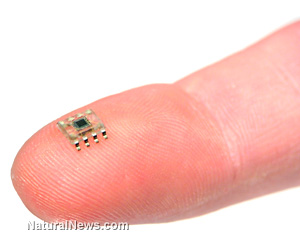
If you believed the concept of medically-injectable
microchips were something out of a science fiction novel, guess again. A cohort
of scientists from universities the world over has developed a raw case of
implantable microchip capable of performing various pre-programmed functions
inside the body for a certain point of time, and later breaking up into
oblivion.
Published in the journal Science, a new study of the technology explains how "transient electronics" are the exact opposite of traditional electronics, which are designed with stability and long-term durability in mind. Dissolvable electronics, on the other hand, are specifically projected to run off once they have reached their respective tasks, or at least this is what we are being differentiated.
"A noteworthy characteristic of modern silicon electronics is its power to remain physically invariant, almost indefinitely for practical purposes," reads the study abstract. "Although this characteristic is a authentication of applications of integrated circuits that exist today, there might be opportunities for systems that propose the opposite behavior, such as implantable devices that function for medically useful time frames but then completely disappear via re-absorption by the body."
One case of this might be implantable chips designed to target open wounds with high temperature in order to prevent infection, particularly during patients' time at hospitals, says a BBC piece on the topic. Some other use might possibly be triggering an immune reaction that targets a potentially deadly infection, considering as how conventional medicine has mostly rejected the much more effective holistic and nutrition-based approaches to preventing and treating disease.
According to reports, test chips have already been created that are composed of a combination of silicon and magnesium oxide, and coated with a protective layer of silk produced by extracting silk from silkworms, dissolving it, and reforming it into a crystallized coating. Depending on the intended lifetime of a particular chip, the heaviness of the silk might be extremely thin to last for only a few hours, or slightly thicker to last for days or even weeks.
Published in the journal Science, a new study of the technology explains how "transient electronics" are the exact opposite of traditional electronics, which are designed with stability and long-term durability in mind. Dissolvable electronics, on the other hand, are specifically projected to run off once they have reached their respective tasks, or at least this is what we are being differentiated.
"A noteworthy characteristic of modern silicon electronics is its power to remain physically invariant, almost indefinitely for practical purposes," reads the study abstract. "Although this characteristic is a authentication of applications of integrated circuits that exist today, there might be opportunities for systems that propose the opposite behavior, such as implantable devices that function for medically useful time frames but then completely disappear via re-absorption by the body."
One case of this might be implantable chips designed to target open wounds with high temperature in order to prevent infection, particularly during patients' time at hospitals, says a BBC piece on the topic. Some other use might possibly be triggering an immune reaction that targets a potentially deadly infection, considering as how conventional medicine has mostly rejected the much more effective holistic and nutrition-based approaches to preventing and treating disease.
According to reports, test chips have already been created that are composed of a combination of silicon and magnesium oxide, and coated with a protective layer of silk produced by extracting silk from silkworms, dissolving it, and reforming it into a crystallized coating. Depending on the intended lifetime of a particular chip, the heaviness of the silk might be extremely thin to last for only a few hours, or slightly thicker to last for days or even weeks.
Are dissolvable 'medical' microchips a prelude to
implantable tracking devics?
As fascinating as this new research
might be to some who believe that such technology will only be used for benign
purposes such as in medicine, the momentum of this type of science seems to be
moving ever closer towards permanent implantable tracking microchips. Earlier
in the year, for instance, researchers in the U.K. were already testing
pharmaceutical drugs equipped with "edible microchips" that track
whether or not patients are taking their medications.
And last summer, research involving "electronic tattoos," or flexible microchip sensors that can be attached to or embedded under patients' skin, was revealed as a supposed "advanced" approach to future medical treatments. A CBS News report from back in January explains how researchers are already testing these chips in heart and brain patients, as the devices could theoretically help prevent heart attacks or brain seizures, we are told. Where this all seems to be heading, of course, is in uncharted, Big Brother tracking territory, where human beings are literally controlled by microchips connected remotely to a centralized server that instructs them on how to behave inside the body. While stories about the technology may appear relatively good-natured at the present time, there is clearly a push for such microchips to become not only normative in modern social club, but also a permanent aspect of the human torso.
The question remains; however, whether or not the public Will openly embrace such technology, or recognize it as the Big Brother Trojan Horse that it truly is, and thus reject it.
And last summer, research involving "electronic tattoos," or flexible microchip sensors that can be attached to or embedded under patients' skin, was revealed as a supposed "advanced" approach to future medical treatments. A CBS News report from back in January explains how researchers are already testing these chips in heart and brain patients, as the devices could theoretically help prevent heart attacks or brain seizures, we are told. Where this all seems to be heading, of course, is in uncharted, Big Brother tracking territory, where human beings are literally controlled by microchips connected remotely to a centralized server that instructs them on how to behave inside the body. While stories about the technology may appear relatively good-natured at the present time, there is clearly a push for such microchips to become not only normative in modern social club, but also a permanent aspect of the human torso.
The question remains; however, whether or not the public Will openly embrace such technology, or recognize it as the Big Brother Trojan Horse that it truly is, and thus reject it.
Scientists develop tiny electronics that dissolve inside your body
If you believed the concept of medically-injectable
microchips were something out of a science fiction novel, guess again. A cohort
of scientists from universities the world over has developed a raw case of
implantable microchip capable of performing various pre-programmed functions
inside the body for a certain point of time, and later breaking up into
oblivion.
Published in the journal Science, a new study of the technology explains how "transient electronics" are the exact opposite of traditional electronics, which are designed with stability and long-term durability in mind. Dissolvable electronics, on the other hand, are specifically projected to run off once they have reached their respective tasks, or at least this is what we are being differentiated.
"A noteworthy characteristic of modern silicon electronics is its power to remain physically invariant, almost indefinitely for practical purposes," reads the study abstract. "Although this characteristic is a authentication of applications of integrated circuits that exist today, there might be opportunities for systems that propose the opposite behavior, such as implantable devices that function for medically useful time frames but then completely disappear via re-absorption by the body."
One case of this might be implantable chips designed to target open wounds with high temperature in order to prevent infection, particularly during patients' time at hospitals, says a BBC piece on the topic. Some other use might possibly be triggering an immune reaction that targets a potentially deadly infection, considering as how conventional medicine has mostly rejected the much more effective holistic and nutrition-based approaches to preventing and treating disease.
According to reports, test chips have already been created that are composed of a combination of silicon and magnesium oxide, and coated with a protective layer of silk produced by extracting silk from silkworms, dissolving it, and reforming it into a crystallized coating. Depending on the intended lifetime of a particular chip, the heaviness of the silk might be extremely thin to last for only a few hours, or slightly thicker to last for days or even weeks.
Published in the journal Science, a new study of the technology explains how "transient electronics" are the exact opposite of traditional electronics, which are designed with stability and long-term durability in mind. Dissolvable electronics, on the other hand, are specifically projected to run off once they have reached their respective tasks, or at least this is what we are being differentiated.
"A noteworthy characteristic of modern silicon electronics is its power to remain physically invariant, almost indefinitely for practical purposes," reads the study abstract. "Although this characteristic is a authentication of applications of integrated circuits that exist today, there might be opportunities for systems that propose the opposite behavior, such as implantable devices that function for medically useful time frames but then completely disappear via re-absorption by the body."
One case of this might be implantable chips designed to target open wounds with high temperature in order to prevent infection, particularly during patients' time at hospitals, says a BBC piece on the topic. Some other use might possibly be triggering an immune reaction that targets a potentially deadly infection, considering as how conventional medicine has mostly rejected the much more effective holistic and nutrition-based approaches to preventing and treating disease.
According to reports, test chips have already been created that are composed of a combination of silicon and magnesium oxide, and coated with a protective layer of silk produced by extracting silk from silkworms, dissolving it, and reforming it into a crystallized coating. Depending on the intended lifetime of a particular chip, the heaviness of the silk might be extremely thin to last for only a few hours, or slightly thicker to last for days or even weeks.
Are dissolvable 'medical' microchips a prelude to
implantable tracking devics?
As fascinating as this new research
might be to some who believe that such technology will only be used for benign
purposes such as in medicine, the momentum of this type of science seems to be
moving ever closer towards permanent implantable tracking microchips. Earlier
in the year, for instance, researchers in the U.K. were already testing
pharmaceutical drugs equipped with "edible microchips" that track
whether or not patients are taking their medications.
And last summer, research involving "electronic tattoos," or flexible microchip sensors that can be attached to or embedded under patients' skin, was revealed as a supposed "advanced" approach to future medical treatments. A CBS News report from back in January explains how researchers are already testing these chips in heart and brain patients, as the devices could theoretically help prevent heart attacks or brain seizures, we are told. Where this all seems to be heading, of course, is in uncharted, Big Brother tracking territory, where human beings are literally controlled by microchips connected remotely to a centralized server that instructs them on how to behave inside the body. While stories about the technology may appear relatively good-natured at the present time, there is clearly a push for such microchips to become not only normative in modern social club, but also a permanent aspect of the human torso.
The question remains; however, whether or not the public Will openly embrace such technology, or recognize it as the Big Brother Trojan Horse that it truly is, and thus reject it.
And last summer, research involving "electronic tattoos," or flexible microchip sensors that can be attached to or embedded under patients' skin, was revealed as a supposed "advanced" approach to future medical treatments. A CBS News report from back in January explains how researchers are already testing these chips in heart and brain patients, as the devices could theoretically help prevent heart attacks or brain seizures, we are told. Where this all seems to be heading, of course, is in uncharted, Big Brother tracking territory, where human beings are literally controlled by microchips connected remotely to a centralized server that instructs them on how to behave inside the body. While stories about the technology may appear relatively good-natured at the present time, there is clearly a push for such microchips to become not only normative in modern social club, but also a permanent aspect of the human torso.
The question remains; however, whether or not the public Will openly embrace such technology, or recognize it as the Big Brother Trojan Horse that it truly is, and thus reject it.